
The Shine Rituals: Gloss, Oils and the Final Rinse
From glossing treatments to the cold rinse, the habits behind hair that catches the light.
Shine is the quality everyone notices and few can explain. It is not a coating or a colour but a question of surface: how smoothly the outer layer of each strand lies, and how much light it sends back in one direction. The good news is that a smooth surface is largely a matter of habit. From the salon gloss to the last cold rinse, these are the rituals behind hair that catches the light.
What Shine Actually Is
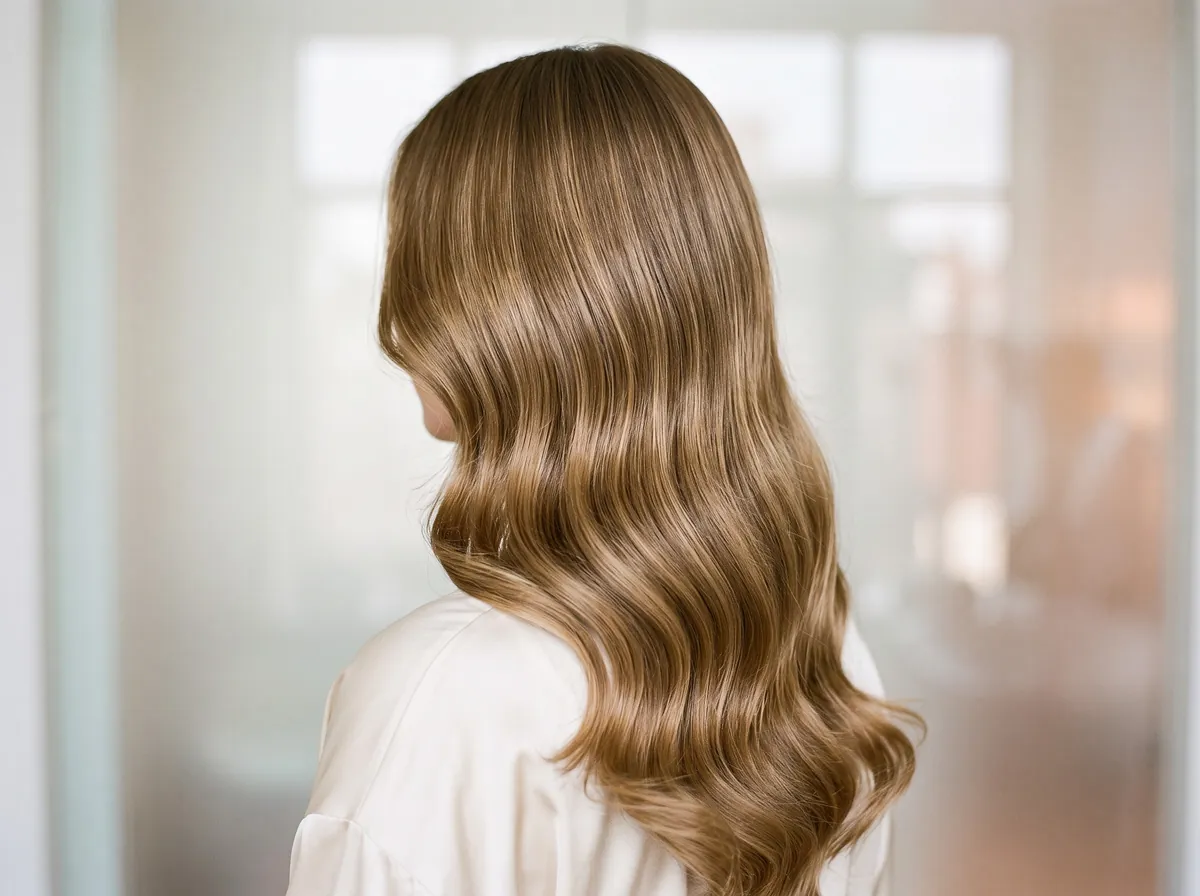
Every strand is wrapped in a cuticle, a layer of tiny overlapping scales that resemble the tiles on a roof. When the scales lie flat and tight, light meets a near-continuous surface and bounces back as a single bright reflection: the band of light you see sliding along smooth hair is the cuticle doing its job. When the scales are raised, by heat, friction, hard water or rough handling, light scatters in every direction and the hair reads as matte.
Shine therefore has two parts: keeping the cuticle smooth, and adding a fine, even film that bridges the gaps between the scales so that light travels across them without interruption. Almost every ritual that follows does one or the other, and the best do both.
The Salon Gloss
A glossing treatment, sometimes called a clear toner or a glaze, is a translucent, acidic formula applied in the salon and left on for twenty to forty minutes. It carries little or no pigment; what it does is close the cuticle and deposit a sheer coating that evens out the surface. Hair looks polished, and colour appears richer simply because light reflects from it more cleanly.
Glosses suit coloured and natural hair alike, and the effect fades gently over four to six weeks as the coating washes away. If you have your hair coloured, ask for a gloss at the end of the appointment: it is the finishing step that separates colour that looks applied from colour that looks lit.
Oils, Masks and the Microfibre Towel
At home, a weekly mask does for the lengths what a gloss does in the salon. Apply it to clean, towel-dried hair from mid-length to ends, comb it through so every strand is coated, and leave it for ten to twenty minutes, under a warm towel if you can. Rinse until the hair feels slippery but no longer coated.
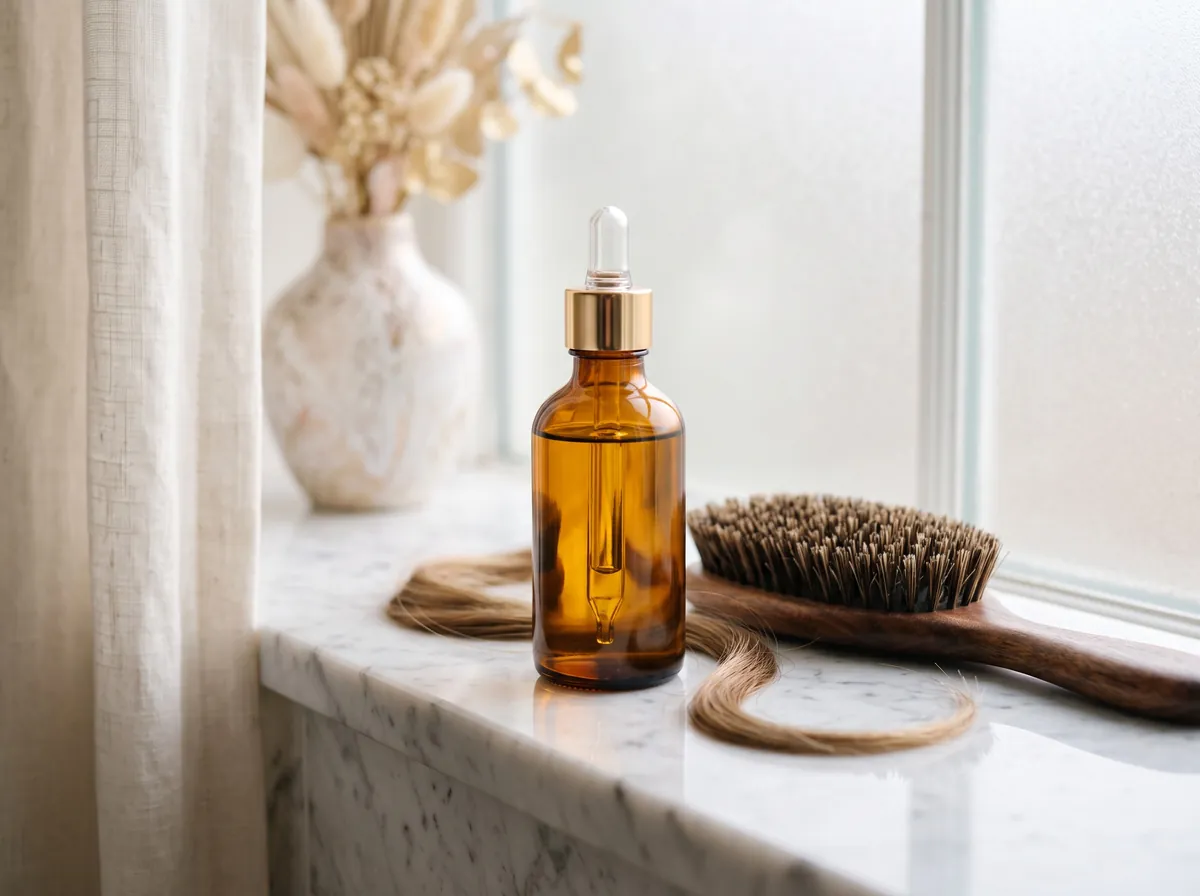
Oil is the most misunderstood of the shine rituals. Too much on dry hair looks greasy; a few drops on damp hair look like light itself. Warm two or three drops between your palms, smooth them over the ends and the underneath layers and keep well away from the roots. The oil seals in moisture as the hair dries and lays the cuticle flat. On dry hair, a single drop pressed into the ends is a finishing touch, never a treatment.
Swap the thick cotton bath towel for a microfibre one or a soft cotton T-shirt. Rubbing roughs up the cuticle before you have even begun; pressing and squeezing with a smooth fabric lifts the water out and leaves the scales lying where they should.
The Cold Rinse and the Right Brush
Finish every wash with cool water. It need not be icy: thirty seconds of water cooler than comfortable is enough to contract the cuticle and set it flat after the warmth of shampoo and conditioner. Hair dried after a cool rinse holds light visibly better than hair rinsed warm, and the habit costs nothing but a brief intake of breath.
Brush dry hair from the ends upwards, holding the lengths in one hand and easing out tangles section by section before you draw the brush from the root. Starting at the top drags every knot down the strand and lifts the cuticle as it goes. A natural boar-bristle brush, used on dry hair in the evening, carries sebum from the scalp along the lengths and polishes the surface as it passes, an old ritual that still works beautifully.
Shine is not added to hair; it is uncovered, strand by strand.
From the Inside, and Against the Elements
Hair is built from protein and grows from a scalp that depends on what you drink and eat. A steady intake of water, protein at most meals and the good fats found in nuts, seeds and oily fish give the follicle what it needs to produce a strand with a smooth, well-formed cuticle. This is not a regime but a kindness, and it shows after a few months in the new growth.
Sun and chlorine both roughen the cuticle, the first by drying it, the second by lifting it. Before swimming, wet your hair with fresh water and smooth a little conditioner through the lengths so that the strand drinks in less of the pool, and rinse as soon as you are out. In strong sun, a hat or a scarf is the most elegant protection there is, and a leave-in conditioner with a sun filter does the rest.
None of these rituals is dramatic on its own. Together, the gloss, the oil, the cool rinse and the brush drawn through hair in the evening add up to a surface that lies flat and sends light back in one clean band. Shine, in the end, is the reward for being gentle, repeated often enough to become a habit.
Questions, answered
How often should I use a hair oil?
A few drops on damp ends every time you wash is plenty, with one drop pressed into dry ends as a finishing touch on other days. More than that weighs hair down and dulls it. Fine hair may prefer oil only once or twice a week, while thick or curly textures can take it more generously.
Does a cold rinse really make hair shinier?
Yes, in a modest but visible way. Cool water helps the cuticle contract and lie flat after the warmth of washing, so the surface reflects light more evenly once dry. It does not need to be icy: thirty seconds of water cooler than comfortable is enough, and the habit costs nothing.
What is the difference between a gloss and a colour?
A colour service deposits or lifts pigment and changes the shade of the hair. A gloss is translucent or very sheer, closes the cuticle and adds a coating that makes whatever colour you have, natural or applied, reflect light more cleanly. Many people have a gloss between colour appointments to refresh the finish.
Three terms
- Gloss
- A translucent, acidic salon treatment that closes the cuticle and adds a sheer coating for reflection, fading over several weeks.
- Cuticle
- The outer layer of overlapping scales on each hair strand; shine depends on these lying flat.
- Boar bristle
- A natural brush bristle that carries the scalp's own oils along the lengths of dry hair and polishes the surface.
Illustration: AI generated.