
The Red Lip, Worn Well
A century of red and the modern way to wear it: finishes, undertones and the question of liner.
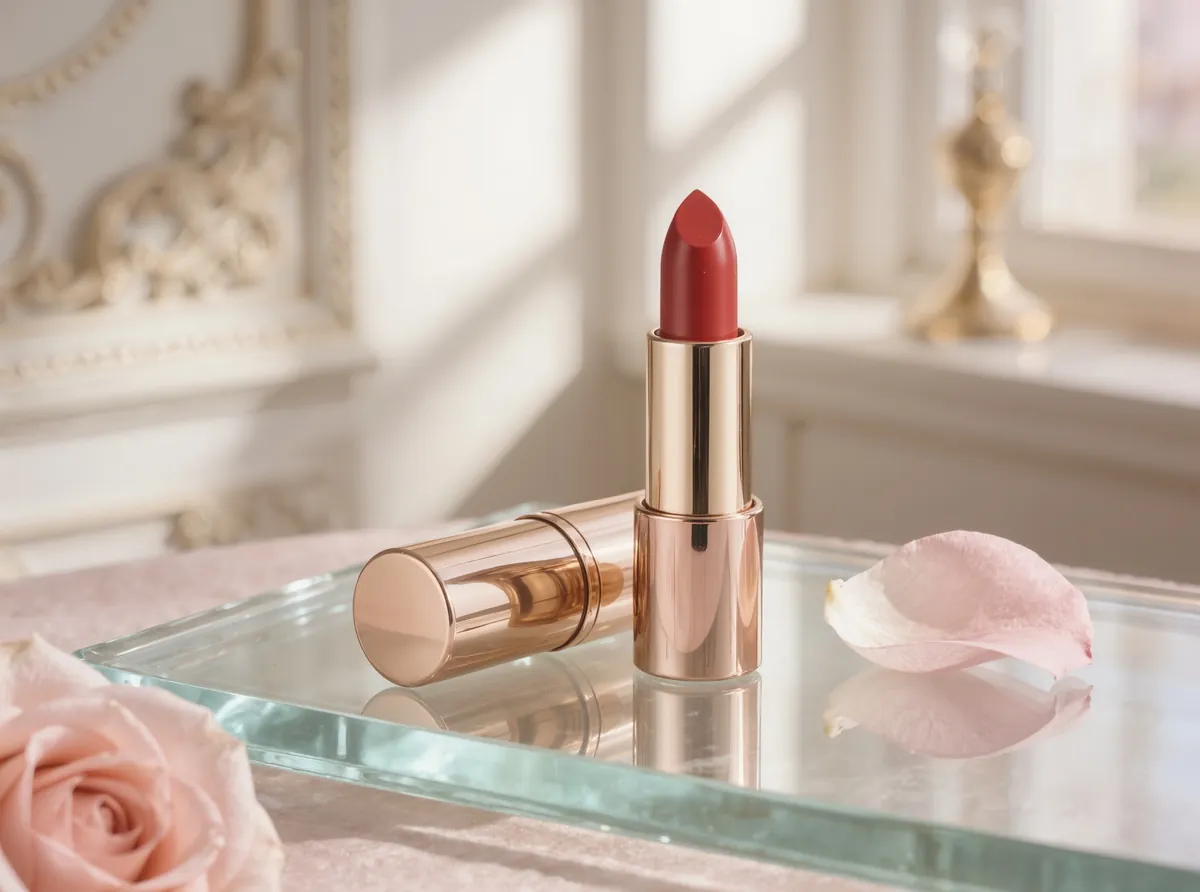
A red lip is the oldest idea in makeup and still the most effective: one colour, placed with care, and the whole face appears finished. It has been worn by screen sirens, factory workers and first ladies, and it survives every trend because it is less a fashion than a stance. Here is a century of red in brief, then the modern way to wear it: the right lean of red, the right finish and an honest answer on liner.
A Century of Red
Red lips are ancient, but the modern red lip was born with the cinema. In the 1920s, silent-film stars painted small, dark, bow-shaped mouths that read clearly on black-and-white film, and women copied the shape with the first swivel-up lipsticks. The look was deliberately artificial, a drawn-on mouth, and it announced a new kind of independence.
The Second World War changed the meaning of red. In Britain and America lipstick stayed in production through rationing because it was judged good for morale, and a bright mouth became a small act of composure, worn to factory shifts and railway farewells. The 1950s made red glamorous again: Technicolor loved it, the mouth grew fuller and the shade warmed, and the pairing of a red lip with winged liner and pale, matte skin became the century's most copied face.
What survives from all of this is a simple truth. Red works because it is confident, and the mouth that wears it should look as if it meant to.
Blue Red or Orange Red
Every red leans one way. Blue-based reds (cherry, raspberry, cranberry, wine) have a cool cast and make teeth look whiter; orange-based reds (tomato, poppy, brick, coral red) have a warm cast and make the skin look sunnier. A true red sits between the two and is the safest first purchase.
Match the lean to your undertone. Cool skin glows in blue-based reds, warm skin comes alive in orange-based ones, neutral skin can wear a true red and most of the others, and olive skin tends to look best in brick and deep berry. If you are unsure, the quickest check is to try a cool red and a warm red on the same afternoon, in daylight, and notice which one makes your eyes look brighter and your teeth whiter.
Matte, Satin or Sheer
Finish decides how the red behaves. Matte is the most intense and the longest wearing, with a velvet surface that photographs beautifully; it also shows every trace of dryness, so the lips must be smooth first. Satin has a soft sheen, forgives texture and feels comfortable for hours; it is the finish most people live in. Sheer is red as a stain or a tinted balm, built up in layers, and it is the easiest way to wear the colour for the first time or by day.
- Matte: full intensity and the longest wear, so prepare the lips well.
- Satin: soft sheen, comfortable, the everyday finish.
- Sheer: a wash of red, layered to taste, ideal for daytime.
- Gloss over any of them: a clear coat on the centre of the lower lip for fullness.
Liner, Preparation and Staying Power
Liner is optional for a sheer red and valuable for a matte one. Its job is not to draw a border but to give the colour an edge to stop at and a base to hold on to. Choose a liner close to the lipstick's shade or a touch deeper, trace the natural line, then fill the whole lip lightly before the lipstick goes on; the colour lasts far longer and fades evenly rather than from the centre.
Preparation makes the difference between a red that looks expensive and one that looks tired. An hour before, exfoliate the lips gently with a soft toothbrush or a damp flannel, apply a plain balm and let it sink in, then blot the balm away before the colour. After the first coat, press a tissue between the lips, dust a whisper of translucent powder over the tissue if you want extra hold, and apply a second coat. The blotting removes the slippery top layer and sets the pigment.
A red lip does not ask for attention; it simply assumes it.
Keep the Rest Quiet
A red mouth is the statement, so the rest of the face should speak softly. Skin that looks like skin, brows brushed up, a single coat of mascara, and either no blush or the faintest wash of a neutral rose, placed high. Eyeshadow, if any, stays within a shade or two of the skin. The contrast between a quiet face and a red mouth is what makes the look modern rather than costume.
This is also why red is the perfect one-product evening. Cleanse, moisturise, a hint of concealer where needed, and then the red, applied in good light with a steady hand. Three minutes, one colour, and you are dressed.
The red lip has outlived every trend that tried to replace it because it asks for so little and gives back so much: a steady hand, the right lean of red, two minutes of preparation, and a face that looks finished before you have decided what to wear.
Questions, answered
Do I really need a lip liner with red lipstick?
Not always. A sheer or satin red worn by day looks fresh without one. Liner earns its place with matte reds and for long evenings: it gives the colour an edge to stop at and a base to hold on to, so the red fades evenly rather than from the centre. Choose a shade close to the lipstick.
How do I stop red lipstick from feathering?
Smooth, balm-free lips are the foundation. Exfoliate gently, let a balm absorb, then blot it away completely before applying colour. Fill the lips lightly with liner, apply the lipstick, blot with a tissue and press a little translucent powder along the outer edge. Tidy any stray colour with a cotton bud dipped in concealer.
Which red suits everyone?
A true red, the shade that leans neither blue nor orange, comes closest. It flatters neutral undertones outright and sits well on most warm and cool skins, especially in a satin finish. If you can only own one red, choose a true red in satin and adjust the intensity by blotting or layering.
Three terms
- Blue-based red
- A red with a cool, slightly blue cast, such as cherry or raspberry, that brightens cool undertones and whitens teeth.
- Satin finish
- A lipstick texture with a soft sheen, between matte and gloss, that forgives dryness and wears comfortably.
- Blotting
- Pressing a tissue between the lips after a coat of lipstick to lift excess product and set the pigment.
Illustration: AI generated.