Layering Scents Like a Perfumer
The quiet art of combining fragrances, with pairings that work and the ones that fight.
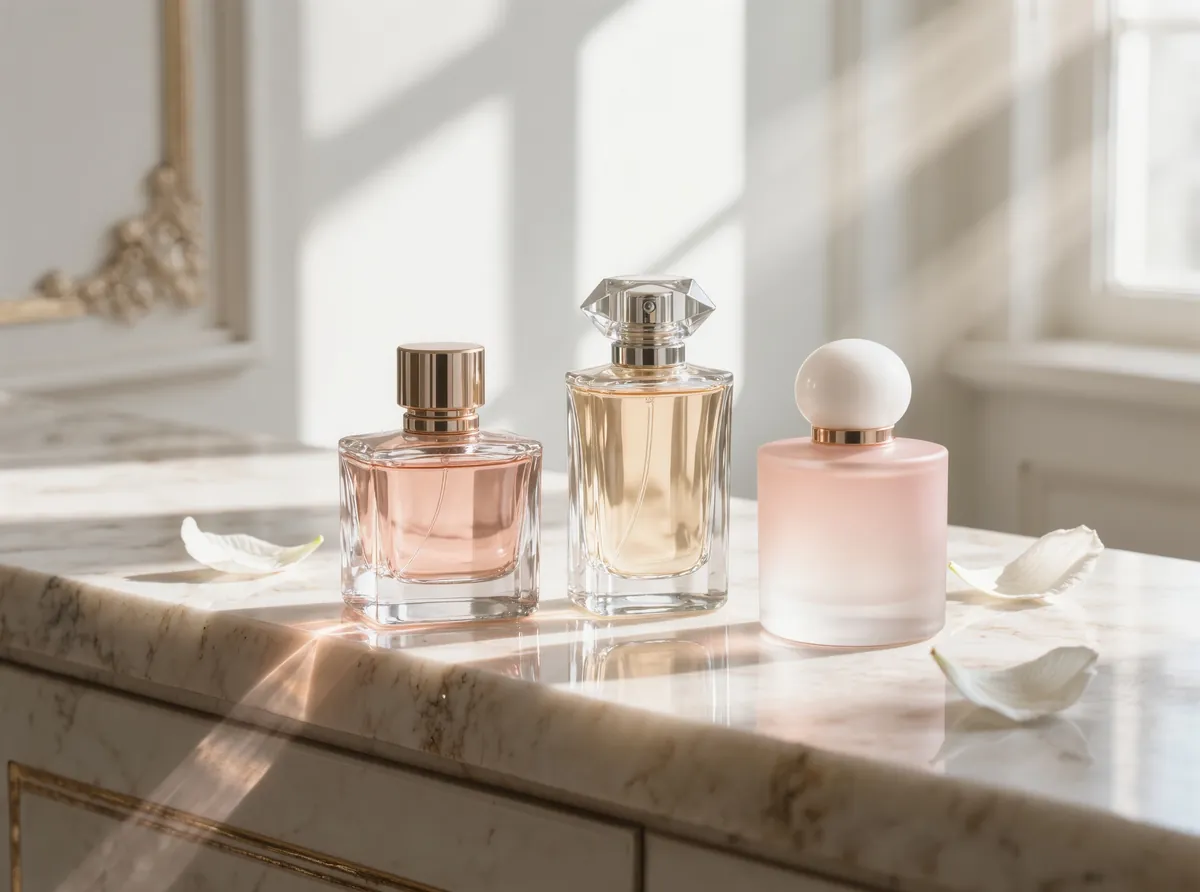
Wearing two fragrances at once used to be considered a faux pas. Today it is one of the most personal things you can do with scent, because the combination belongs to nobody but you. Done well, layering adds depth, warmth or lift to a composition you already love. This guide sets out the principles perfumers follow when they build an accord, five pairings to try, and the combinations best kept apart.
One Anchor, One Accent
Every successful layer has a hierarchy. One fragrance is the anchor, the scent that gives the combination its body and its lasting power. The other is the accent, a lighter touch that shifts the mood: a little more brightness, a little more warmth, a flower where there was none. Two anchors compete for the same space, and two accents evaporate into nothing. Decide which role each bottle plays before you spray.
The anchor is usually the richer composition, often from the amber or woody families, or anything with a generous base of musk, vanilla or resin. The accent is often a soliflore, a citrus or a simple musk. Think of it as a jacket and a scarf: the jacket sets the silhouette, the scarf changes the colour.
Find the Shared Note
Perfumers rarely combine materials at random. They look for a bridge, a note that appears in both scents, so that the join is invisible. When you layer, the same logic applies. Pair across families, but let one ingredient appear on both sides. Vanilla sits comfortably with woods because sandalwood already carries a creamy sweetness. Citrus and musk share a clean, skin-like quality. Rose and oud have been paired for centuries because the rose softens the smoky depth of the wood.
Iris and amber work because both have a powdery, slightly cool texture. Read the note lists of the two bottles you are considering and look for the overlap. If there is none, the combination may still work, but you are improvising rather than composing.
Five Pairings to Try
These are described as note combinations rather than named bottles, because the idea travels across houses and price points. Start with the heavier scent and finish with the lighter one, always on skin, and give the pair a full day before you judge it.
- Vanilla over sandalwood: a creamy, warm skin scent for autumn evenings.
- Bergamot over white musk: clean, bright and office-friendly, with a longer tail than citrus alone.
- Rose over oud: the classic pairing, where the flower lifts the smoky wood and the wood gives the rose gravity.
- Iris over soft amber: powdery and quietly elegant, like cashmere in scent form.
- Fig over cedar: green and milky over dry wood, a summer garden that lasts into the night.
The Order and the Season
Apply the heavier fragrance first and let it dry completely, then add the lighter one over or beside it. Spraying the delicate scent first simply buries it. Use fewer sprays of each than you would alone: one of the anchor and one of the accent on each pulse point is usually enough, because the two together read louder than either does on its own.
Let the season guide the balance. In warm weather, make the fresh or citrus component the anchor and use a woody or musky scent as a whisper underneath. In cold months, reverse the weighting so that amber and woods carry the day and a floral or green note sits on top like frost on a window. The same two bottles can therefore give you two different fragrances across the year.
Two scents, one shared note, and the join disappears into something only yours.
What to Keep Apart
Some combinations fight no matter how carefully they are applied. Two gourmands together, say a caramel and a chocolate, quickly become cloying because the sweetness has no counterweight. Two loud florals, a tuberose and a heavy jasmine for instance, cancel each other out into a general, undefined flower. Two strong chypres compete for the same mossy base and end up muddy.
Very different concentrations also need care: an extrait will swallow an eau de cologne whole, so if you want a light accent, use it generously or move it to hair and fabric where it has a chance to be heard. When in doubt, pair a complex scent with a simple one. Complexity on both sides is where layering most often goes astray.
Layering is less a trick than a conversation between two things you already love. Begin with one anchor and one accent, look for the note they share, and let the season decide the balance. In a world where the same bottles sit on every counter, the combination on your wrist can be the one thing nobody else is wearing.
Questions, answered
Can I layer fragrances from different houses?
Yes, and some of the best combinations do exactly that. Houses design matching body products for their own scents, but there is no rule against crossing lines. Judge by notes, not labels: look for a shared ingredient, give one scent the role of anchor, and test the pair on skin over a day before wearing it out.
How many fragrances can I layer at once?
Two is the sweet spot, and three is the sensible maximum. Beyond that the composition loses definition and the nose can no longer tell what it is smelling. If you want more complexity, choose a richer anchor instead of adding another bottle. A well-layered pair should read as a single new scent.
Should I layer on skin or on clothes?
Build the pair on skin first, because warmth is what fuses the two into one scent. Fabric holds fragrance well but keeps the layers separate, so you smell two things side by side rather than a blend. Once you know a pairing works, a mist of the lighter accent on a scarf extends it nicely.
Three terms
- Accord
- A blend of several notes that together create a single new impression, the building block of a perfume.
- Soliflore
- A fragrance composed around one flower, such as rose or lily of the valley, often used as a layering accent.
- Gourmand
- A scent style built on edible notes such as vanilla, caramel, chocolate or praline.
Photo: licensed stock photography.