
The Japanese Way: Layering, Lotion and Patience
Why J-beauty treats skincare as a quiet daily ceremony, and what is worth borrowing from it.
In Japan, skincare is rarely described as a fight against anything. It is closer to housekeeping: a daily tending of a surface that deserves attention, done with clean hands and no hurry. The steps are few, the textures are light and the gestures are repeated for decades. Here is what sits behind that approach, from a philosophy of not wasting to the lotion applied in whispers, and which parts travel well.
Mottainai and the Ethic of Care
Mottainai is a Japanese word with no neat English equivalent. It expresses regret at waste, and beneath that a respect for the value of things: a bowl, a length of cloth, a morning. Applied to beauty, it becomes a quiet instruction. Use what you have fully. Do not pile on products that cancel each other out. Treat your skin as something already good that deserves to be looked after, rather than a problem to be solved.
That ethic shapes the routine. Steps are chosen for a reason and kept for years, because consistency is seen as the active ingredient. The pleasure lies in doing a small thing well, every day, which is also a fair description of most lasting beauty.
Lotion Is Not What You Think
The word lotion, keshousui in Japanese, does not mean a cream. It means a hydrating water: a fluid, almost weightless liquid applied after cleansing to return moisture to the surface and prepare it for whatever follows. Western toners once existed to remove the residue of soap; Japanese lotion exists to give something back. The difference in intention is the whole story.
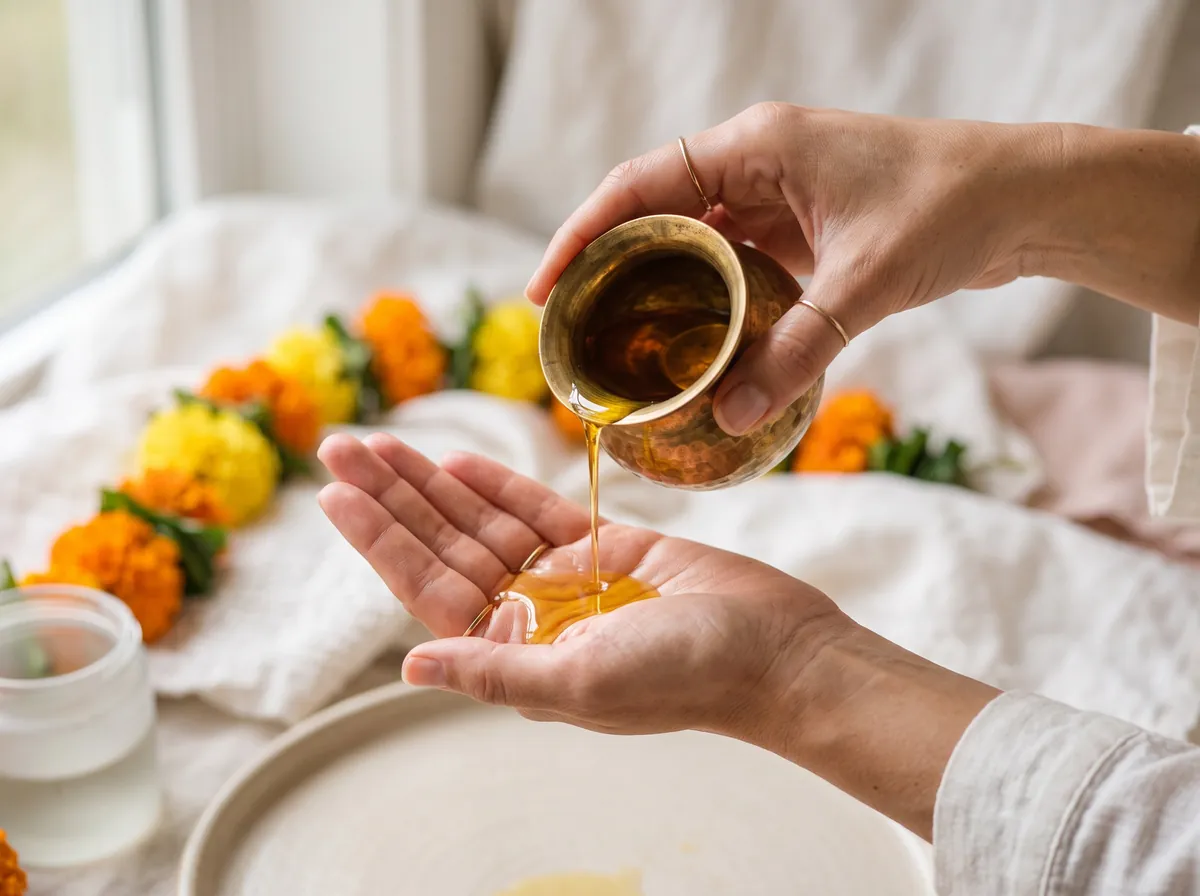
The lotion is applied in layers. You pour a small amount into your palms, warm it for a second and press it into the face with flat hands, holding for a breath on each area. Then you repeat, two or three times, until the skin feels cool, plump and faintly tacky. Some people prefer a cotton pad, drawn softly outwards and finished with a few seconds of pressing. The point is saturation without friction: the skin drinks, and nothing is rubbed.
Only then come the richer textures: a serum if you use one, an emulsion (a light milk) and, at night, a cream. Each layer is thin, so each settles before the next arrives.
Oil First, Then Water
Double cleansing is Japanese in spirit long before the phrase travelled. The evening begins with an oil or balm massaged over dry skin to dissolve sunscreen, makeup and the day; the oil lifts what water alone would leave behind. A splash of warm water turns it milky and rinses it away. A gentle foaming or cream cleanser follows, worked into a soft lather with the fingertips and rinsed with many handfuls of lukewarm water. In the morning, water alone is often enough.
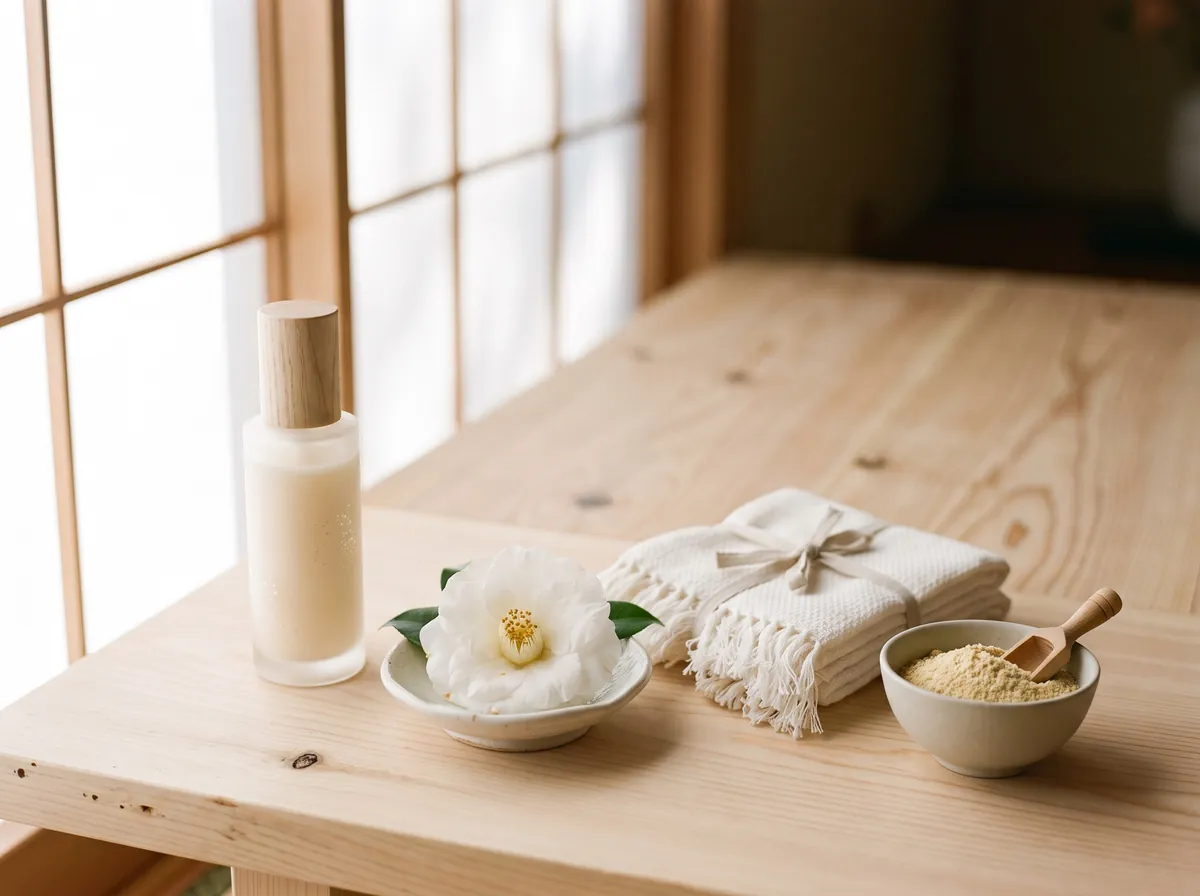
Two traditional ingredients have a place in this story. Rice bran, the fine outer layer removed when rice is polished, has been used for centuries in small cloth bags as a softening wash, and rice bran oil still appears in cleansers. Camellia oil, pressed from the seeds of the tsubaki flower, was the classic dressing for hair and skin in the Edo period and is prized for its light feel and the way it absorbs.
Press, do not rub: the skin remembers gentleness long after it forgets effort.
Shade, Restraint and the Seasons
Sun avoidance is cultural in Japan rather than a recent trend. Parasols, long gloves in summer, wide hats and a daily sunscreen with a high PA rating are ordinary, and the goal is an even, undisturbed complexion that reads as cared for. Makeup follows the same logic: a sheer base, a touch of blush, groomed brows and a lip stain, so that skin remains the subject.
The routine also shifts with the calendar. In the humid months lotion may be all the hydration a face needs, with a light emulsion at night. When the air dries in autumn, the layers grow: one more pass of lotion, a richer cream, an oil pressed over the top on cold evenings. Nothing is thrown out; the quantities simply move. That, too, is mottainai.
What Travels Well
You do not need to adopt a culture to learn from it. Three habits travel well: cleanse with oil before water in the evening, hydrate in thin layers rather than one thick one, and touch your face with pressure instead of friction. Add a fourth if you can, which is to keep the same routine long enough to know whether it works.
The Japanese way is not slower for the sake of it. It is slower because attention is part of the result. Ten unhurried minutes, morning and evening, with your palms warm and the lotion cool, add up over years to something no single product can promise. Patience, it turns out, is a texture too.
Questions, answered
Is Japanese lotion the same as a toner?
Not quite. A classic Western toner was made to remove residue after cleansing and often felt astringent. Japanese lotion, keshousui, is a hydrating water designed to add moisture and prepare the skin for the layers that follow. Many modern hydrating toners now work in the same way, so the names overlap.
How many layers of lotion should I apply?
Two or three thin passes are typical, pressed in with the palms and left to settle for a few breaths each time. Stop when the skin feels cool, plump and faintly tacky. In humid weather one layer may be enough; in dry air you can add another.
Can I double cleanse if my skin is oily?
Yes. A lightweight cleansing oil dissolves sebum and sunscreen without stripping, and the second cleanse removes any trace of it. Rinse thoroughly with lukewarm water and pat dry. Many people with oilier skin find their complexion feels more balanced once the two-step evening cleanse becomes routine.
Three terms
- Keshousui
- The Japanese term for lotion, a light hydrating water applied in thin layers after cleansing.
- Mottainai
- A Japanese expression of regret at waste that carries a deeper respect for the value of things.
- Tsubaki
- The Japanese camellia, whose seed oil has dressed hair and skin since the Edo period.
Illustration: AI generated.